

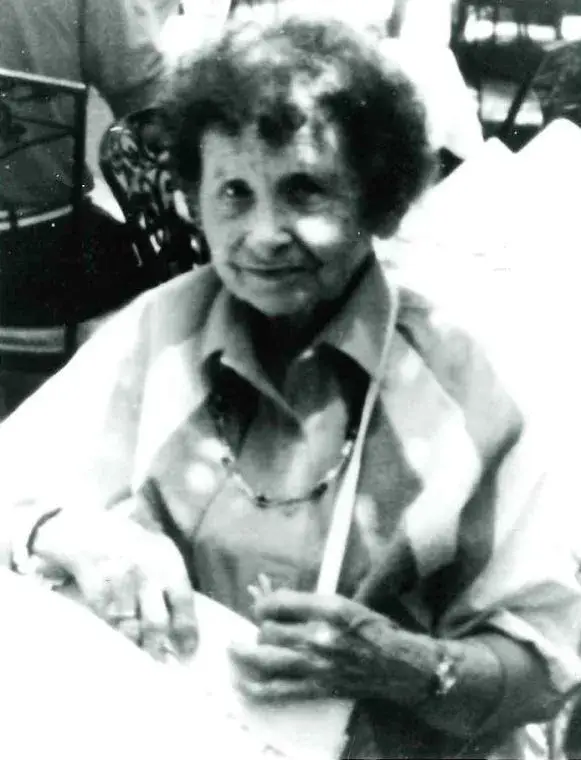
Eva Hale, source: The Herald-Times
Missing: Eva Mae Hale
Eva Hale, aged 79 years, disappeared from a small, old, rural cemetery one cool, crisp, October afternoon. Her car was found abandoned at the scene, though not where she originally parked it. Her case has changed hands repeatedly over the years, but investigators have turned up no trace as to her whereabouts. However, some details at the scene where her car was found have lead police to suspect that foul play is a factor in her disappearance. What happened to Eva on October, 15, 1996, at that little cemetery in Marco, Indiana, and where is she now?
Eva was born Eva Mae Hauck to parents Bonnie Guy and Flossie Edith (nee’ Cruse) Hauck, on September 8, 1917, in Greene County, Indiana. She joined older brothers Horace and Clifford. In 1919, the family welcomed a fourth child, daughter Mary Alice, however she passed away shortly after birth. She was buried in a cemetery where they lived, in Marco, Indiana – the same cemetery from which Eva would later go missing.
The 1920 US Census records Eva and her family as living in Stafford Township, in the southwest corner of the county. Greene County is approximately 90 miles southwest of Indianapolis, or about an hour and forty-five minutes driving distance. For reference, the county seat of Greene is located at Bloomfield. The largest city is Linton. The population of Greene County was approximately 36,000 people at the time. When Eva went missing in 1996, the county population had dropped to between 30,000 and 33,000 people. The population of Marco itself was even more narrow, between 200 and 225 residents.
One hundred years later, in 2020, not a lot has changed about this place. Almost 95% of the population of Greene County identifies as Caucasian (non-Hispanic or Latino), and nearly 83% of residents still live in rural areas. German ancestry makes up the largest demographic of these residents. The city of Marco itself is still an unincorporated area, and has been since it was first settled in the early 1800s. Because of this, there are no official city boundaries. When Eva went missing in 1996, about half of the county was documented as farmland, according to the 1997 Census of Agriculture.
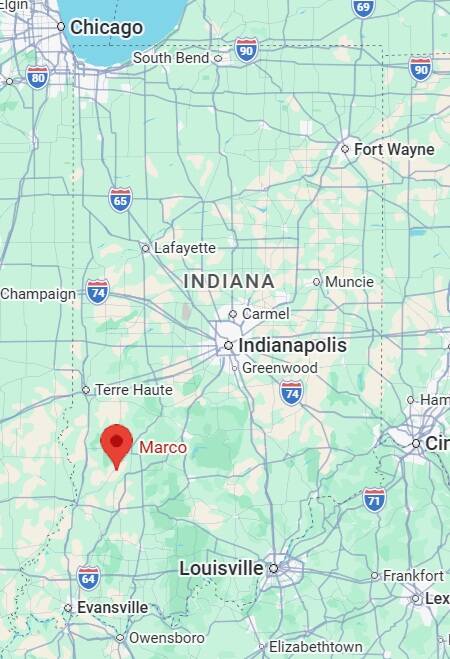
Indiana map showing Marco, via Google Maps
I say all this to try to set the scene – to give you an idea of how rural and remote the area of Eva’s disappearance really is. The image in your head, of sprawling fields and gravel country roads, will be important later, so keep it in the front of your mind as we talk about this case.
During her formative years, Eva’s father worked as a farm laborer, a coal miner, a grain elevator operator, and for the state on a road construction crew. Eva’s mother, Flossie, was a homemaker, like so many women of the day. Neither of them had a higher-than-7th-grade education level. It was an ordinary, blue-collar upbringing in farm-rich rural Indiana.
Eva graduated from Marco High School sometime around 1935, having completed her fourth year. She subsequently married Lester Wayne Hale, a public high school math teacher, on September 18, 1938. She dedicated herself to raising their only child, son Guy Hale, born in December of 1939. The couple lived first in Lyons, in Greene County, then Greencastle, and lastly Bainbridge before finally settling in Terre Haute (Vigo County) in the early 1950s.
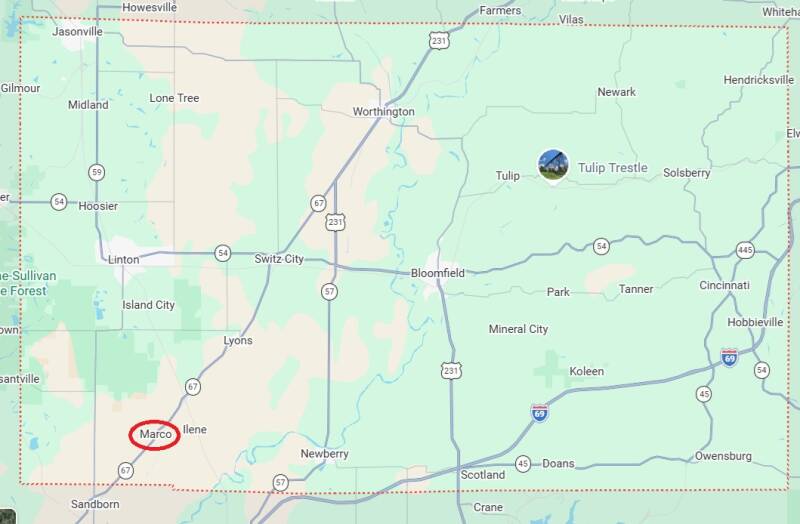
Greene County map highlighting Marco, IN - credit: Lost in the Crossroads
The intervening years are difficult to piece together, but from what I could gather, Eva’s son Guy grew up to follow in his father’s academic footsteps, ultimately earning his doctorate at Indiana University. He then taught mathematics and computer science at Indiana State University, in Terre Haute, where he was living at the time of Eva’s disappearance.
By 1996, Guy was all Eva had left of her immediate Hauck family. She had lost her brother, Horace, in 1921, aged eight years, and her father and mother in 1963 and 1982, respectively. Her husband, Lester, died a couple years later in 1984. He was buried at Mt. Moriah Cemetery, in Dugger, Indiana. Lastly, Eva’s brother Clifford passed away unexpectedly in an accident on his farm in 1990. He was buried next to their parents and siblings in Marco Cemetery, in Marco, Indiana.
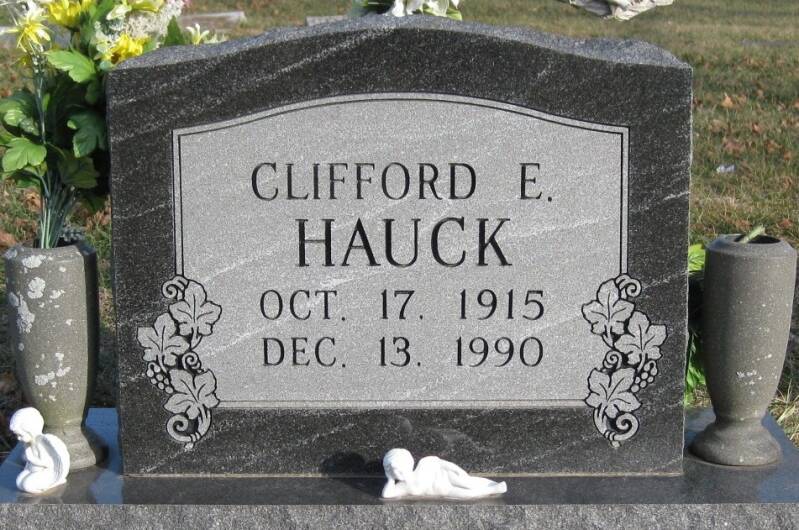
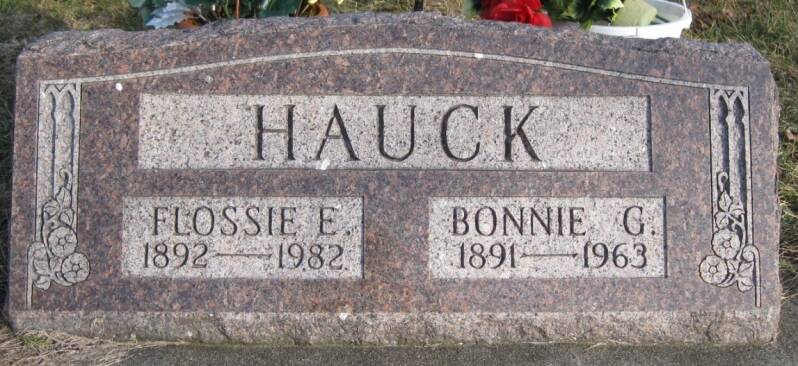
Left: Grave of Eva's brother, Clifford; Right: Grave of Eva's parents - credit (both) findagrave.com
On Tuesday, October 15, 1996, Eva got into her white 1983 Chrysler New Yorker and began the approximately hour and fifteen-minute drive from her home in Terre Haute south to Marco, planning to visit the cemetery and place a pumpkin on Clifford’s grave. It was morning, according to an article in the Sunday Herald Times-Mail (Bedford, Indiana) by Caroline Clay in November, 1996. This day, October 15th, was two days before what would have been Clifford’s 81st birthday. Eva made regular visits to the graves. Normally, this was a trip that Eva would take with her son, Guy, or her friend Dorothy, but on this Tuesday neither of them were available, and she decided to go by herself rather than delay and miss Clifford’s birthday. That morning, one of her neighbors saw her back out of her driveway to begin her trip. This is the last confirmed sighting of Eva herself.
Marco Cemetery is one of only two in the small town. There is no exact address listing for it online, and it doesn't have a website. It is located near the remote rural intersection of County Road 610 South and County Road 1000 West. With few homes or businesses nearby, the site is on a small hill in the midst of flat farmland which is dotted here and there with grain silos. There is a single gravel road that runs around the rectangular perimeter of the cemetery, and a few trees interspersed within. I couldn’t find a source for the history of it, but from what I could gather from genealogical databases, there are over 1200 graves in Marco Cemetery, the oldest of which are from the mid-1800s. It’s still in use today.
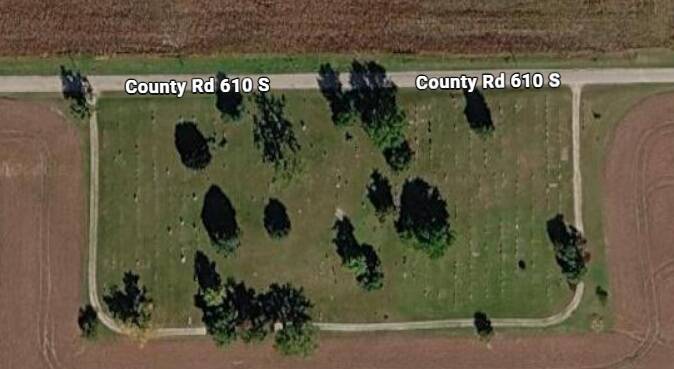
Bird's eye view of Marco Cemetery, Marco, IN - via Google Maps
Laura Lane wrote for the Bloomington Herald Times that “sometime late in the day,” back in Terre Haute, Eva’s son Guy received a call about the vehicle. The farmland around the cemetery seems to have been owned by several members of the same family, and one of the brothers, Clyde, is the person who originally noticed that the Chrysler New Yorker had been there for some time. It’s not clear whether the call received by Guy came from Clyde or someone in his family, or whether he contacted police first and they are the ones who contacted Guy. As Marco didn’t have its own police department, the Greene County Sheriff’s Department would likely have been the first agency to respond to the call.
Although Eva hadn’t lived in Marco for decades, she undoubtedly still knew people there, and she was a frequent visitor to the cemetery, always for certain holidays and other occasions throughout the year. Given the low-traffic nature of CR 610 S at the time, a vehicle there for a length of time would likely have attracted attention. A car parked around the perimeter of the cemetery would be easily visible from the street. Guy immediately gathered his family and headed to Marco.
By 6pm on October 15th, about an hour after Guy was contacted, police were on scene, searching the area on foot, and a short time later, there were helicopters and K9s joining in the search. Eva’s car was reportedly found parked beneath a tree, unlocked, “about 40 steps,” from Clifford’s headstone. According to the True Crime Chronicles Podcast episode on October 17, 2023, the car hadn’t moved between when the time the call was placed to Guy, and when police arrived at the cemetery. Assistant Editor Nick Schneider reported for the Sun-Commercial in 2013 that the car was parked in a different location than Eva would usually park. The driver’s side window was rolled halfway down, and Eva’s purse was found (possibly on the passenger seat), along with a set of her car keys which were lying apart from the car- in the space she usually parked. Sources conflict on whether the purse was inside or outside the car, and some articles describe the keys found as being her spare set, though it’s unclear how this was determined.
Eva’s purse was also reported to still have money inside, however according to her son Guy, as reported in True Crime Chronicles, Eva was known to carry the bulk of her cash in white bank envelopes, with a small, separate stash of loose bills for emergencies. However, no white bank envelopes were found, and this detail was enough to arouse the suspicions of Eva’s family. A pumpkin she had brought to decorate with was found on Clifford’s grave, which suggests that Eva at least made it to the cemetery and was there long enough to leave it before the events that lead to her disappearance.
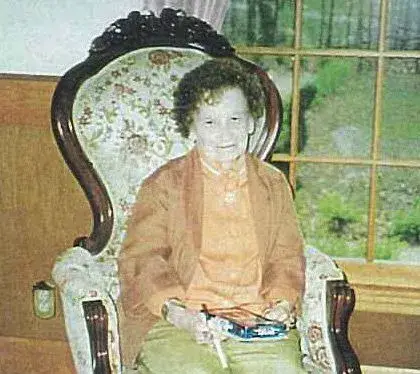
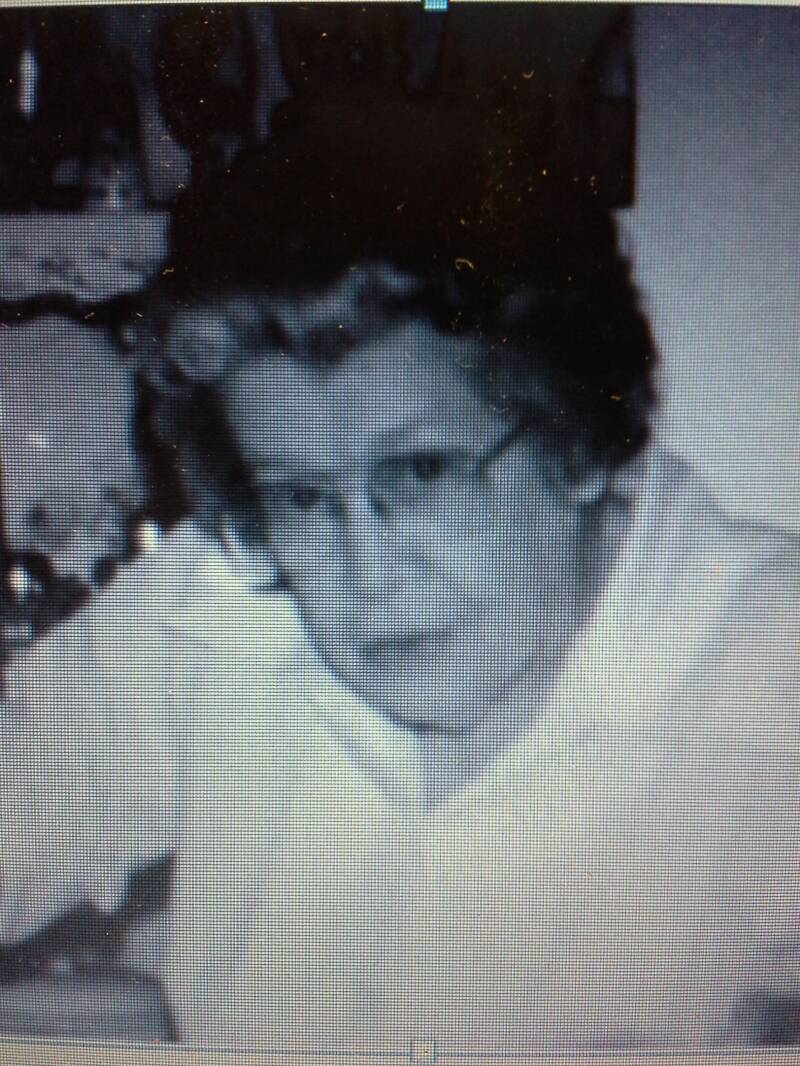
Eva Hale, credit: The Herald Times
But where was Eva? The Indianapolis Star reported that the helicopters that searched that night were equipped with thermal imaging devices that should have been able to detect Eva by her body heat if she had wandered away from her car for some reason. The sensors found wild animals and livestock, but no trace of Eva. Greene County Sheriff Tom Franklin is quoted in an Indianapolis Star article, dated October 18, 1996, that police didn’t believe she’d gotten confused and wandered away from her car- she would have been found by thermal imaging. This was harvest season, and the surrounding fields would have been difficult for her to traverse on foot, thick with corn and soybeans. Her friend, Dorothy, also said Eva was in overall good health at the time she vanished.
Despite this, Dorothy told a reporter that she didn’t think Eva would have been able to move the pumpkin on her own, and may have asked someone for help. I haven’t been able to find a publicly available photo of the pumpkin, so I don’t know whether it was a tiny decorative variety, or a heavier pumpkin of the carving variety. I also haven’t seen reported anywhere a source for the squash – did she pick it up in Terre Haute in the days before or morning of her departure? Or did she stop somewhere on her way to Marco to purchase it? If so, perhaps she paid with cash, and someone spotted her and followed her to the cemetery with the intent to rob her.
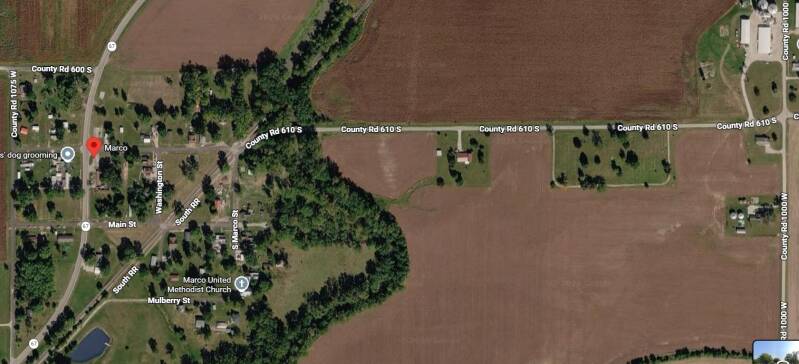
Map of Marco, IN - via Google Maps
At first police seemed reluctant to call Eva’s disappearance an abduction. In an October 18th, 1996 article for the Times-Mail, police were reported as believing that Eva had become confused and walked away, however it seems that theory didn’t last long. Police quickly became suspicious. Within two weeks of her disappearance, Terri Jo Cooper reported for the Times-Mail of Bedford that police were treating the case as if foul play was involved. At the time, detectives were looking for two women who were seen by a witness to be standing outside a dark-colored sedan in the cemetery around 1:30pm- the same time Eva was believed to have been there. These two women may be valuable witnesses – even if their information was simply ‘she wasn’t here when we were here,’ this could help police establish a timeline for Eva’s movements that day, however I’m not sure if these women were ever located. The Greene County Sheriff at the time, Tom Franklin, told the Indianapolis Star that they had no reason to believe Eva had walked away on her own, and Eva’s friend, Dorothy, agreed, adding that she was still cognitively very sharp.
By 1996, police departments were regularly collecting samples for DNA testing (CODIS was launched by the FBI in 1994), so the police kept that in the back of their minds while they processed Eva’s vehicle, but what sort of evidence they gleaned from the car has never been publicly released. Since no one has ever been formally charged in Eva’s case, presumably they have not had any luck finding matches in CODIS or AFIS (the fingerprint database). By early November 1996, less than three weeks after Eva went missing, the FBI had joined the investigation to try and develop of behavioral profile of the suspect.
If all this seems suspiciously proactive for a missing elderly woman in rural Indiana farm country, that’s because Eva Hale’s disappearance was the latest in a string of disappearances, deaths, and murders in Greene County between 1994 and 1996. The scene was all too familiar to locals and investigators. In fact, it’s almost impossible to read about Eva’s case without running into at least a passing mention of the other victims.
Here’s what to know about those other cases:,
- Rita Murray Buffington – 33 years old, disappeared July 28, 1994 from Bloomfield, Indiana in central Greene County. She was described as being mildly developmentally disabled. Her partially-clothed body was found August 7, 1994 by fisherman, partially decomposed, in the water at Shake Lake #2 (one source described it as a pit) in Greene-Sullivan State Park. Police determined she had been shot multiple times. They couldn’t determine whether she was sexually assaulted No one has ever been convicted of a crime in relation to Rita’s case.
- Pamela “Pam” Rae Foddrill – 44 years old, disappeared August 18, 1995 while making the three-minute walk home from the grocery store three blocks from her Linton, Indiana home in west-central Greene County. Like Rita, Pam was developmentally disabled, and lived at home with her mother, who knew she was missing within twenty minutes of when Pam left the house. Her body was later found wrapped in a sleeping bag on December 2, 1995, along a roadside in Russellville, rural Lawrence County, eastern Illinois. Her cause of death was blunt force trauma from being beaten, though the details of her murder are horrendous. Arrests and convictions came later in Pam’s case.
- Annetta “Michelle” Stephens (sometimes spelled Stevens)– aged 32 years, disappeared May 19, 1996 while on her way home to Marco. Her car, with her cigarettes still inside, was found abandoned. Michelle is sometimes omitted from the list of the others, possibly because it was ultimately found to be domestic-violence related and therefore unrelated to the others. Michelle’s husband, Jesse Wayne Stephens, later admitted to killing his wife and disposing of her body, and he was sentenced to prison.
- Audra A. Page – 88 years old, disappeared July 9, 1996 from her home in Pleasantville in Sullivan County, along the border with southwestern Greene County. Her body, partially clothed, was later found July 13, 1996 in Richland Creek near the covered bridge on Seminary Lane, near Bloomfield, Indiana. Although her obituary states she died of drowning, other sources say no cause of death could be determined for Audra, however police believe her death is suspicious. She was in the early stages of Alzheimer’s, and had mobility issues. She didn’t drive or have a car, and relied on a walker or cane to navigate her home. The location where she was found was 22 miles away from her home. Officers believed it was unlikely she could have traveled this distance on her own by foot. Lastly, she was found without her undergarments, which suggests a potential sexual component to her case. No one has ever been arrested or charged with a crime in relation to Audra’s death.
On the surface, these cases may not seem to have much in common as a whole, but when you take a step back and put them into perspective, it’s not hard to see why connections were drawn. Prior to 1994, the homicide rate in Greene County was approximately one per year. What unfolded between 1994 and 1996 was unprecedented. In addition to a dramatic jump in violent crimes and suspicious deaths and disappearances, the cases are further linked by geography. I explained earlier how rural Greene County truly is. Two cases might have been seen as a coincidence, but five stretched the bounds of believability.


Left to Right: Rita Buffington (courtesy Unsolved and Unknown, Facebook); Pamela Foddrill (courtesy The Herald-Times); Audra Page (courtesy ISP.gov)
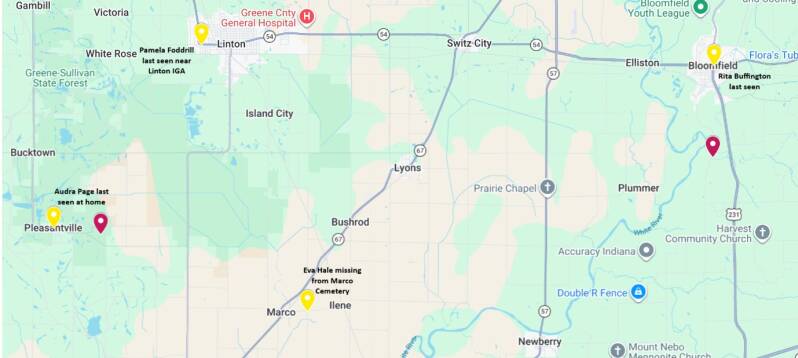
Map depicting locations around Greene/Sullivan Counties where Eva, Audra, Pamela, and Rita were last seen/believed to have been before they went missing, credit- Lost in the Crossroads
Additionally, all were female. Audra and Rita were found in water, and Eva has not been found at all. Two, Eva and Audra were elderly, and Rita and Pamela were developmentally disabled. The common thread is that these factors made them particularly vulnerable to someone who may have had bad intentions. Depending on the motive for the homicides / abductions, it’s not so far-fetched to think one or more cases could be linked.
The earliest reporting I could find in which police publicly linked Eva's case to any of the others was on October 18, 1996. In a statement to Caroline Clay of the Herald-Times, Greene County Sheriff Tom Franklin drew a clear parallel between Eva's case and that of Audra, and it's clear that all the women were in the minds of investigators as they worked through the evidence. Police seemed to take a hard look at several people early on in the investigation, a surprising number in quick succession within the first year of Eva’s disappearance. Before I detail those folks, I would like to add the caveat that none of them has ever been charged or convicted with any crime as it relates to the disappearance of Eva Hale.
Number 1:
The first identified suspects in Eva’s case were 38-year-old Jackie E. Owen of Marco, and 18 year old Christopher P. Anderson of Greene County. A January 1997 article in the Indianapolis Star states the two appeared to have come onto police radar after their involvement in a November 1996 robbery in Monroe County of an elderly woman in which several thousand dollars was taken from her purse in her home. A third person, 18 year old Tina Hunter, was also charged in the robbery but never named in relation to Eva. Master Trooper-Investigator Chris Lewis identified them in court documents. Owen denied involvement in the case, though police suspected he was being deceptive during a polygraph examination. However, Owen did state he believed Anderson could be involved, and a warrant was issued to collect bodily fluids from him for testing. Caroline Clay for the The Times-Mail reported that police were also attempting to match samples from Owen with evidence taken from Eva’s car. FBI investigators consulted for two days with local detectives in early December 1996, which seemed to solidify their suspicious that two of the cases were linked, though they declined to say which two.
By August 1997, police had initiated a search for Anderson after he went missing while on bail for a burglary charge, along with a 50-year-old woman named Patricia, from Bloomfield, IN. The Vincennes-Sun Commercial reported that a condition of his bond for the robbery and burglary incidents was that he not leave the area. Patricia later phoned a family member and told them she left with Anderson voluntarily just to get away, and that they were both fine. Reportedly the two had met at the end of July and commenced what was reportedly a romantic fling. I can’t find much more on Anderson, and though he seems to have had some subsequent run-ins with police. I couldn't find a photograph of either Owen or Anderson.
Number 2:
The next person on the list is a man named Orville Lynn Majors. In an odd turn, his name became publicly linked to Eva’s disappearance after his attorney made statements that police were interested in him. According to an article in the Indianapolis Star on Wednesday, August 6, 1997, by correspondent Mike Ricketts, Majors WAS considered a suspect in a string of deaths of elderly patients (164 of them, to be exact) at the Vermillion County Hospital (now known as Union Hospital Clinton) in Clinton, Indiana (north of Terre Haute) where he formerly worked as a licensed practical nurse. Majors, who is originally from Linton, Indiana, was 35 years old in 1997, and police apparently took samples of his hair, saliva, and blood.
His attorney on the hospital case, identified in the article as I. Marshall Pinkus, indicated that anonymous sources informed him that Majors was being looked at for any connection to the women's cases, however the Vermillion County Prosecutor at the time, a man named Mark Greenwell, declined to comment. Further, Indiana State Police Sgt. Leon Allen publicly insisted that Majors was not a suspect in the string of deaths and disappearances in Greene County. He was eventually convicted in the deaths of six of his former hospital patients (though still a suspect in a hundred more). He has never been charged in the cases of Pamela, Rita, Audra, or Eva. Still, I felt it was important to mention him since his name has become inextricably linked and will show up during even the most basic research into these cases.
Number 3:
Raymond Eugene Turpin was first publicly linked to the cases in September 1997 when a slew of court records were unsealed. The Vincennes-Sun Commercial reported that he was arrested by FBI agents in Indianapolis on charges of carrying a firearm- prohibited because he was already a convicted felon. This arrest lead to searches of his residence which yielded an alarming array of evidence: handcuffs, bolt cutters, more weapons, binoculars, women’s undergarments, and home videos, among others. Turpin is described as having connections to Rita Buffington, Pamela Foddrill, and Audra Page, which is interesting, though maybe not surprising, even for a small town. Documents indicated he knew all three of them. Turpin was 42 in 1997, and had a previous conviction for the abduction and rape of a different woman in Bloomington in 1978. He was released from prison on those charges in 1989.
A relative of Turpin’s told police that he and Turpin often fished in the area near where Rita Buffington’s body was later found. Another relative lived with Buffington at one point. The same relative who fished with Turpin near Greene-Sullivan State Park had a wife who worked as a home-health aid for Audra Page. The relative told police he had taken Turpin with him to Page’s residence several times during the period in which his wife cared for her. If that’s not enough, Pamela Foddrill was a first cousin of Turpin, and he would likely have known about her vulnerabilities. His connection to these women, the array of startling items found in his home, his geographic proximity, and police's interest in him for Pamela, Rita, and Audra's cases was enough for the news media to link him to Eva’s disappearance, however he was never charged with a crime in connection to any of the cases, and within a couple months, public interest in him seemed to have waned.
Turpin surfaced again in June 2005 when he and his brother, Basil L. Turpin, were linked to a series of thefts and burglaries in Greene County, for which they were later arrested. Their base of operations seems to have been in Lyons, Indiana, which is a geographic center point between where all four women were last seen. A witness also identified them as having sold around 900 pounds of copper, which was later determined to have been stolen. At time time, Raymond was 49 years old, and Basil was 62. I can't tell what became of these charges, though they seem unrelated to the women's cases.
Raymond Eugene Turpin passed away in May of 2014, at the age of 58, and is buried in Walnut Grove Cemetery in Greene County.
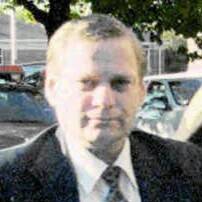

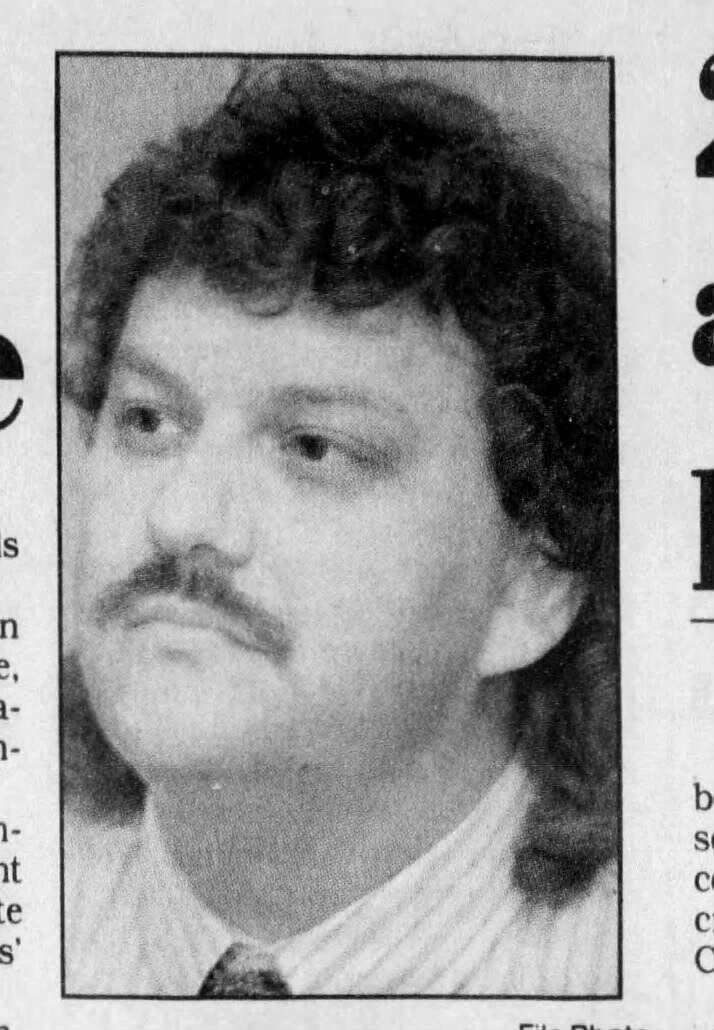
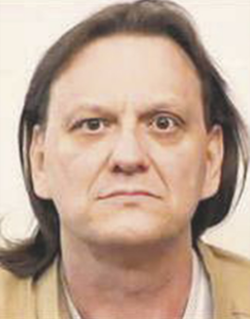
Left: Screengrab of Jerry E. Russell, Sr., WTHI-TV News 10's 1995 coverage of the case - youtube. // Right: Photo of Roger Leon Long as it appeared in The Herald-Tines, April 16, 1999
Number 4:
In October, 1997, a man named Roger Leon Long was arraigned in court for the murder of Pamela Rae Foddrill. An article by Greg Jefferson in the Indianapolis Daily News (October 14, 1997) indicated that police had only began to look at Long as a suspect in Miss Foddrill’s case as recently as a few weeks prior, and he was arrested hours prior to his scheduled release from Lawrence County Jail on other unrelated charges. Lawrence and Greene Counties share a border. Two inmates from Lawrence County, who I will not name because they are not suspects in Eva’s case, told police that Long had detailed to them how he had abducted and murdered Foddrill, and admitted to killing two additional women. The article states that police believed one of the other murders he confessed to may have been that of Eva Hale. Long reportedly had a girlfriend living near Linton at the time, and made frequent trips from Bedford , in Lawrence County, and Linton to visit her. It's this tip from the jailhouse informants that seems to have triggered the investigation into Roger Long and ultimately his associates.
According to Jamie Wildman for the Times-Mail of Bedford (October 11, 1997), the inmates had told that police that Long was agitated at news of the discovery of the remains of Pamela Foddrill, and claimed that Eva’s body would not be found. He claimed to have buried her in a freshly dug grave in a cemetery. He described several items, a gun, a leather jacket, rolls of film, etc. to the inmates and expressed concern for the whereabouts of those items. It’s unclear what connection the leather jacket may have to Eva’s case, though reports said one was missing from her vehicle. The inmates also claimed that Long had confessed to disposing of a third victim, but had limited information about this victim, and police have not identified who they believe this to be, if in fact they know. On September 24, 1997, police served a search warrant at the residence of Long's girlfriend, which a judge unsealed a short time later. They were looking for evidence in both Pamela and Eva's cases. No motive was given for the purported attack on Eva, and the search did not result in Long being charged with any additional crimes.
Ultimately, Long, along with four others, were convicted in Pamela’s case. A July 2000 article in the Times-Mail (Bedford) identified them as Jerry Earl Russell, Sr. of Linton and John A. Redman of Linton, who, along with Long, are serving life sentences and then some. At least one source I read suggested that Russell was obsessed with Pamela, and may have been the mastermind behind the abduction, and not Roger Long. A December 1998 article in the Times-Mail noted that all three men are convicted child molesters. Also convicted were Wanda S. Hubbell of Linton, who agreed to testify against the other parties in exchange for a plea deal, and Plynia K. “Pixie” Fowler, who received 14 years for her part in luring Pamela Foddrill to a van where she was ultimately abducted. Hubbell’s deal stipulated that she provide information and evidence to police in other cases of missing or murdered women, and identify others who may have participated in or have knowledge of those cases, however I can’t find any reporting on whether she provided such information or whether it was useful to investigators. Roger Leon Long had told those two Lawrence County inmates that his then-girlfriend accompanied him to dispose of Foddrill’s body, but she doesn’t appear to have ever been charged in relation to the case, so I will withhold her name.
Long and Russell are still serving out life sentences in Indiana Department of Corrections facilities. John Redman passed away sometime after his conviction was upheld in a 2001 appeal. The IDOC lists his status as 'deceased.' Wanda Hubbell served her sentence and was released sometime after 2018, and appears to have stayed out of trouble since. Plynia Fowler also served her time and was released, and has kept a low profile since then.

Undated photo of Eva depicting her brown hair
I tried to do some research on the plausibility of the theory that Eva might have been buried in a freshly dug grave in that cemetery - this idea had me researching how long it takes grass to grow in an effort to determine how "fresh" a grave would have to be in order to not obviously stand out to police as having been disturbed. The consensus seems to be that by about eight weeks, in autumn, in west-southern Indiana, seeded grass would to grow. Based on this, I was able to find a record of a burial in mid-September, and one earlier in August 1996 that might have been recent enough to Eva's disappearance to be of interest, but there are no direct cemetery records available- the sources for this information are gleaned from websites like findagrave, which rely on public uploads of information, and obituaries shared by local funeral homes, meaning there could have been more burials in that timeframe. By the time police received the tip about Eva possibly being buried in someone else’s grave, a whole year had passed and the site would no longer stand out as “freshly dug.” The cemetery was searched on foot and with police K9, and by air via the helicopters immediately following her disappearance. If they were doing their due diligence, the possibility that Eva was buried there must have occurred to them at the time. I’d like to think police revisited the cemetery upon receiving the 1997 tip, but I haven’t found any source that details what that might have entailed, if it even took place, and without the case file I can't be certain.
If you’re keeping track, that’s nine people looked at by police within the first year of the investigation. As disturbing as it is to think that police were able to come up with nine names in such a small geographic area and in such a short span of time, no arrests resulted from these investigations as to Eva's disappearance. For their part, police seemed to be keeping an open mind, examining every lead rather than developing tunnel-vision on one particular suspect.
I’ll stop here with the information on these four rounds of suspects for the sake of time, however there’s plenty more to know about them including both prior and subsequent arrests and criminal charges for some, though how relevant any of it is to Eva’s case is unknown. After the dust settled around Roger Long’s convictions and those of his accomplices, reporting on Eva and the other Greene County cases seems to have tapered off, along with hot leads for investigators to follow.
The FBI behavioral analysis profile, if one resulted from the collaborations between Indiana authorities and the Feds, does not appear to have been released to the public.

Eva's card in the INDOC Cold Case Playing Cards, 3rd Edition - 2013
Eventually, Eva was placed on the Indiana Department of Corrections cold-case playing cards that are distributed to inmates across the state in the hope that they will generate tips from within the walls of the prison. Eva was originally the 9 of spades in the second edition, before being recast as the 2 of Clubs in the third edition. The card incorrectly states Eva went missing on September 15, rather than October. Police are confident enough in the foul play theory that the card is titled “Unsolved Homicide.” Curiously, Eva’s card is right beneath that of Debra Wilhite, which was the first case I ever wrote about.
In 2014, Detective Brad Stille, who was also investigating the disappearances of Rita Buffington and Audra Page, told Laura Lane of the Herald-Times that the case is considered cold. Despite this, he had received a recent tip that a man living in northern Indiana may have information regarding Eva’s case that he learned while imprisoned in Greene County for unrelated charges. Police were attempting to track that lead down. I couldn’t find any follow-up reporting on this as to whether detectives were able to glean any helpful information, but if they did, it wasn’t enough to move the case towards a resolution.
Fast forward to 2021. Caitlin Hunt for WHTI-TV spoke to Indiana State Police detective Sgt. Matt Ames, who told her that the Bloomington Post had received a tip in Eva’s case as recently as August 2021, and that detectives were in the process of following up on that information. I couldn’t find any follow up on what, if anything, came from this lead. These developments may still be ongoing.
According to Laura Lane from the Bloomington Herald-Times in her February 2014 article, Guy and his mother bought plots in Mount Moriah Cemetery in Dugger, Indiana, following his father’s death in 1984. It’s where he buried his wife, Linda, when she passed in 2012. Eva’s stone reads her full name, Eva Mae Hale, September 8, 1917- her date of birth. Her family didn’t know what to do about her date of death, so they left it blank. This was the last instance I could find of Guy speaking publicly about his mother's disappearance.

Eva Hale - Indiana State Police
Guy eventually relocated to Florida some years after his mother’s disappearance. He raised his family, and has living children and grandchildren, though Guy himself passed away May 28, 2022 in Fort Myers Florida. According to his obituary, his family and his beloved pet cat were with him. He is laid to rest in Dugger next to his wife, in that plot purchased almost 40 years before. The remaining family is no doubt still hoping for answers in Eva’s case.
It’s unlikely that Eva is still alive today, if for no other reason than her age – she would be 109 years old. At the time she was last seen on October 15, 1995, at age 79, she was 4’10” tall and weighed only 98 pounds. She had dyed brown hair that was reported to be thinning and blue eyes, and wore eyeglasses to see. She had pierced ears, and left her purse behind when she went missing. According to Nick Schneider for the Greene County Daily World in an April 2013 piece, she may have been wearing a wig.
In a community as small as the one I described above, it’s nearly impossible to believe that no one knows anything about what happened that day in Marco Cemetery. That someone could be you. Maybe you only heard what you thought was a rumor – there’s no harm in calling it in. At this point it can’t hurt the investigation. Maybe you spent time in the Greene or Lawrence county jails and heard someone talking. Maybe you were hanging out at a local watering hole like the Palace Bar or the Sportsman’s Pub and overheard someone talking or bragging about Eva’s case after a few beers. Maybe you dated someone who implied their involvement or maybe threatened to hurt you or make you disappear like Eva, but you’re now safe and free from that relationship. Maybe you are familiar with any of the “suspects” I mentioned above and can recall them talking about the investigation. Maybe you are one of those two women who also stopped by the cemetery that day - if so, please reach out to investigators.
Indiana State Police - District 33 is the agency and branch assigned to Eva's case. They can be reached directly at (800) 423-1286. Information can also be provided via their general tip line at (800) 382-4628. If you have any information, please call. Eva deserves to have a proper resting place and her family deserves to lay her to rest. It's never too late to help bring a resolution to a grieving family, or to do the right thing.
This article was originally published on 8/10/26 (tvm, Lost in the Crossroads)